

The Filter tool lets you stop a Zaplane workflow right where it is unless the data matches a rule you set — so only the runs that pass your check continue to the actions after it. This guide shows how to add a Filter action after a Form Submitted trigger.
Step 1: Create a Workflow
Go to Zaplane > Workflows from your WordPress dashboard, then click Create Workflow to open the workflow editor.
Before adding a Filter tool, you need to set up a trigger first. Here is how to do it quickly:
- Click Select an app under the Trigger box, then choose Apps.
- Search for and select your trigger app — in this example, we are using aBlocks Contact Form.
- Choose the Trigger Type that matches the event you want to watch for, then click Continue.
- On the Configure tab, set up any required options, then click Continue.
- On the Test tab, click Test Trigger to confirm it is working correctly, then click Save.
Once your trigger is saved, proceed to the next step to add the Filter tool.
Step 2: Add the Filter Tool
On your workflow canvas, click the + icon next to your trigger to open the Add Action panel, then select Filter from the Tools list.
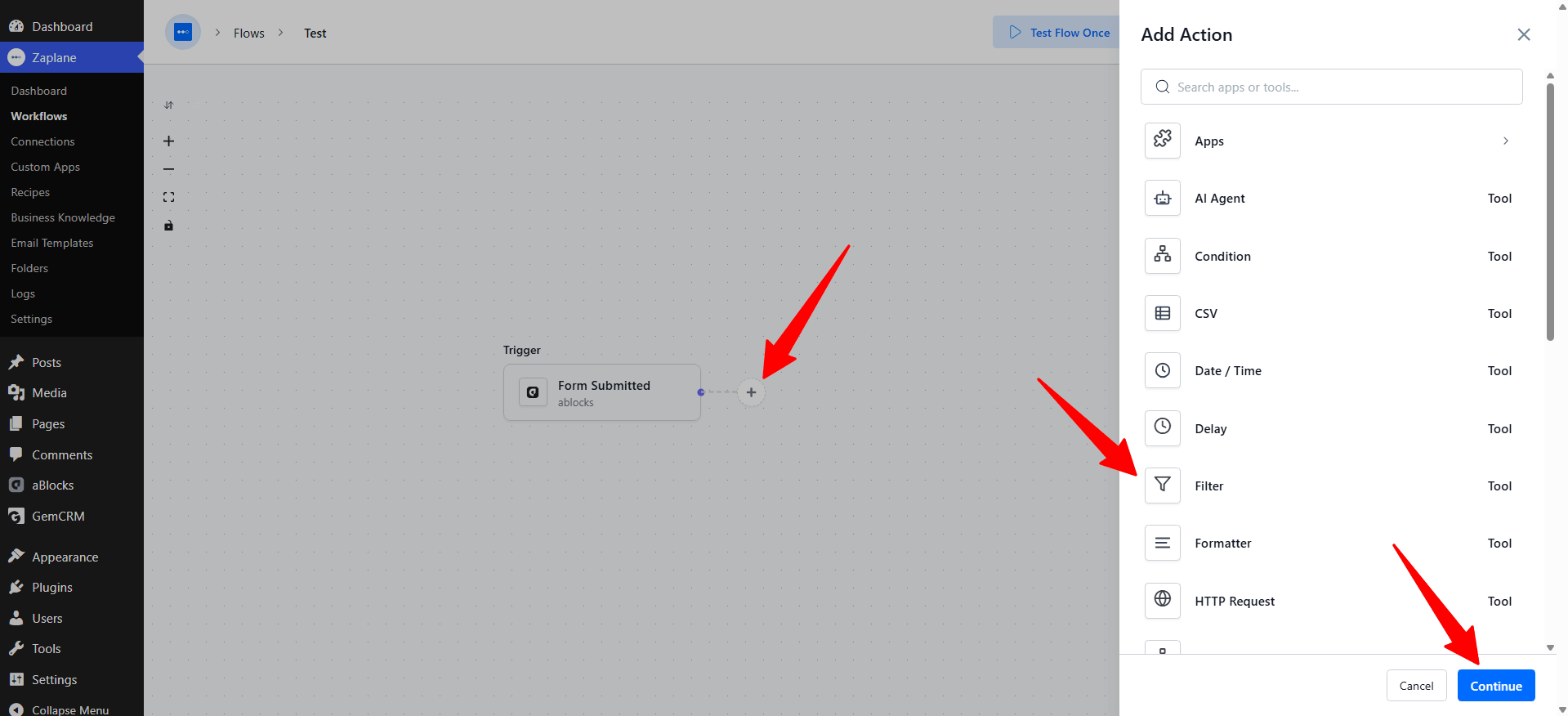
Step 3: Select “Filter”
On the Select tab, choose Filter as the Action Type, then click Continue.
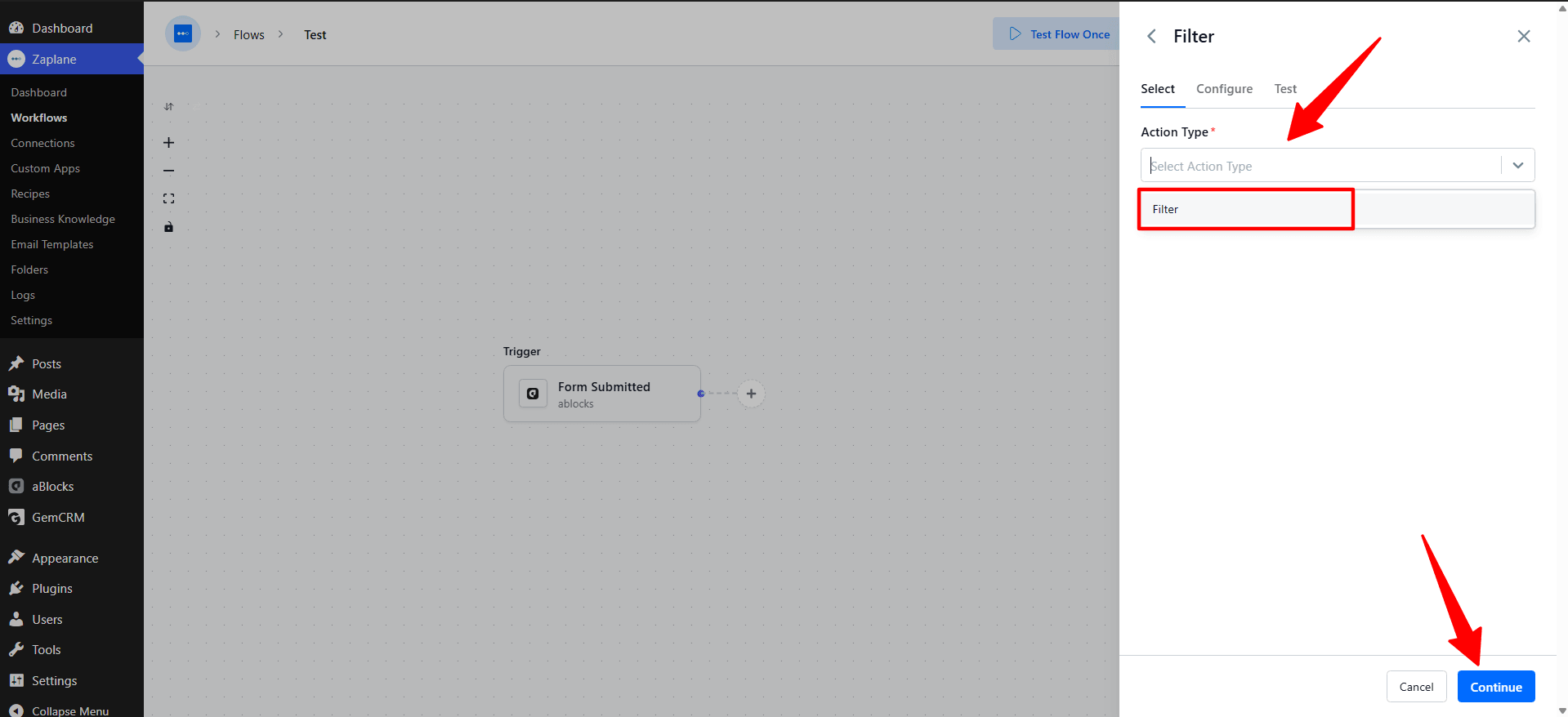
Step 4: Configure the Action
On the Configure tab, set your Left Value, choose an Operator (e.g. Equals), and set the Right Value — map these dynamically from your trigger data. Click Add to include the rule, or OR Group to add alternate conditions. Click Continue when done.
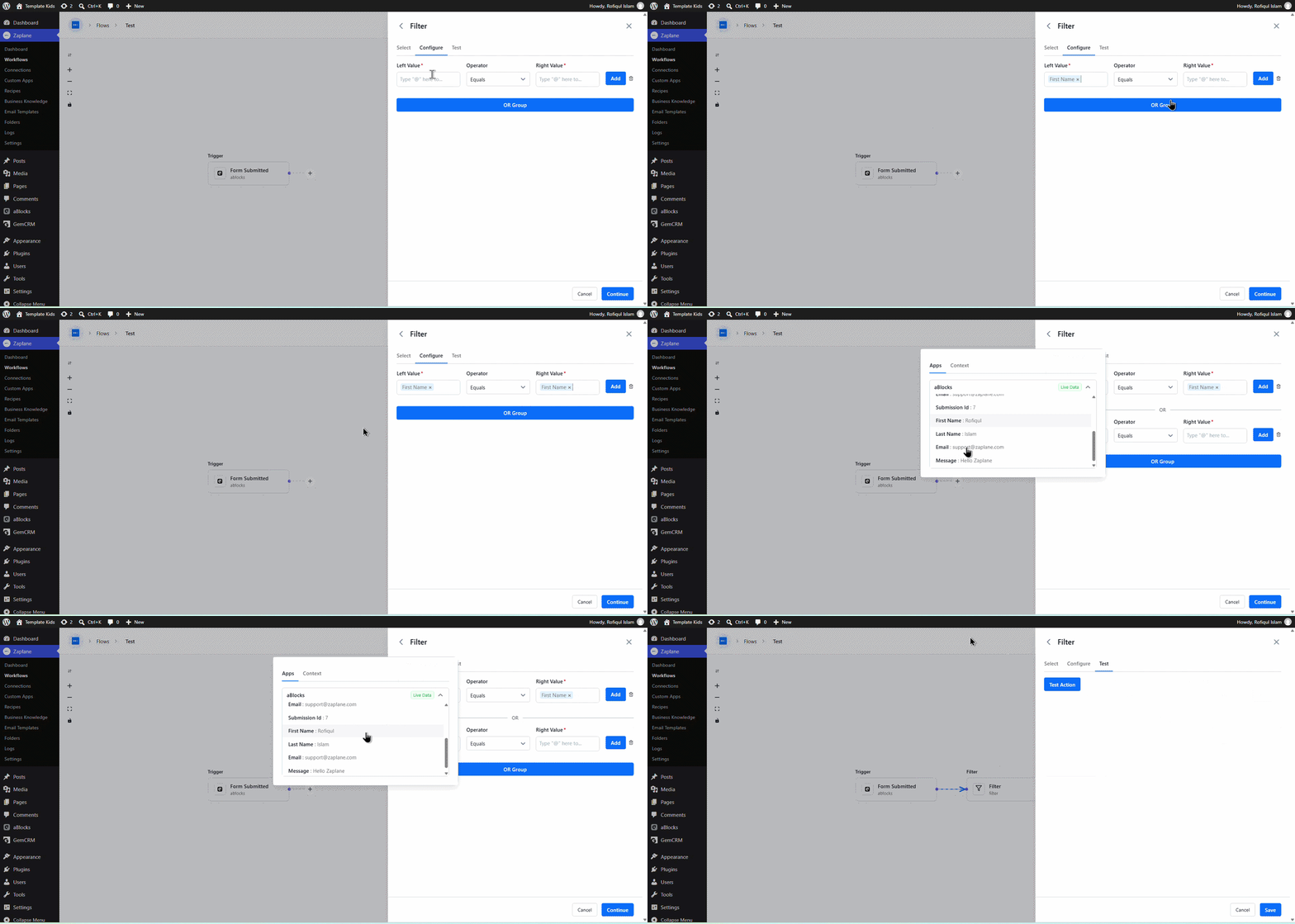
Step 5: Test the Action
On the Test tab, click Test Action to check the filter against sample data. Once it works as expected, click Save.
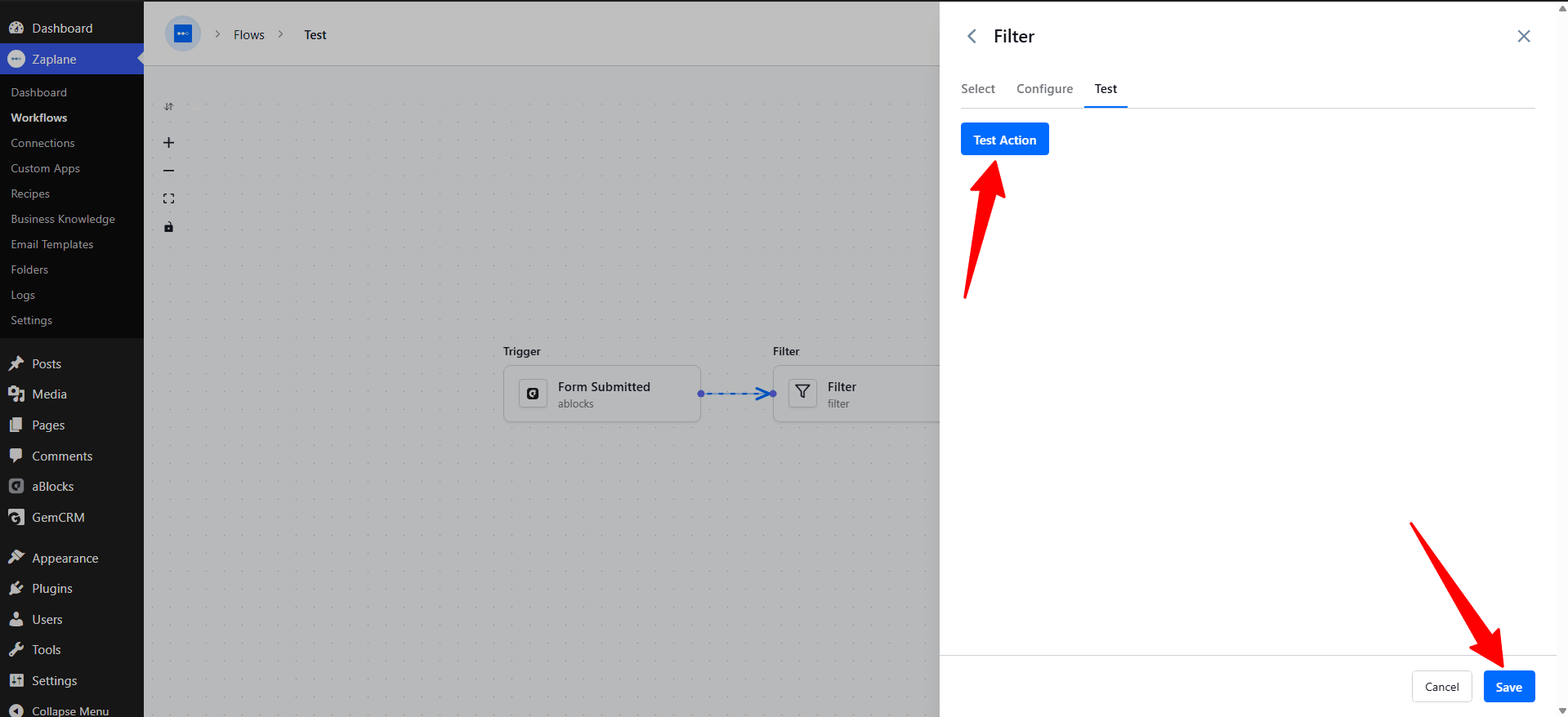
Step 6: Update and Activate the Workflow
Back on the workflow canvas, click Update to save your changes, and make sure the workflow status is set to Active. You can view execution results anytime from the Logs.
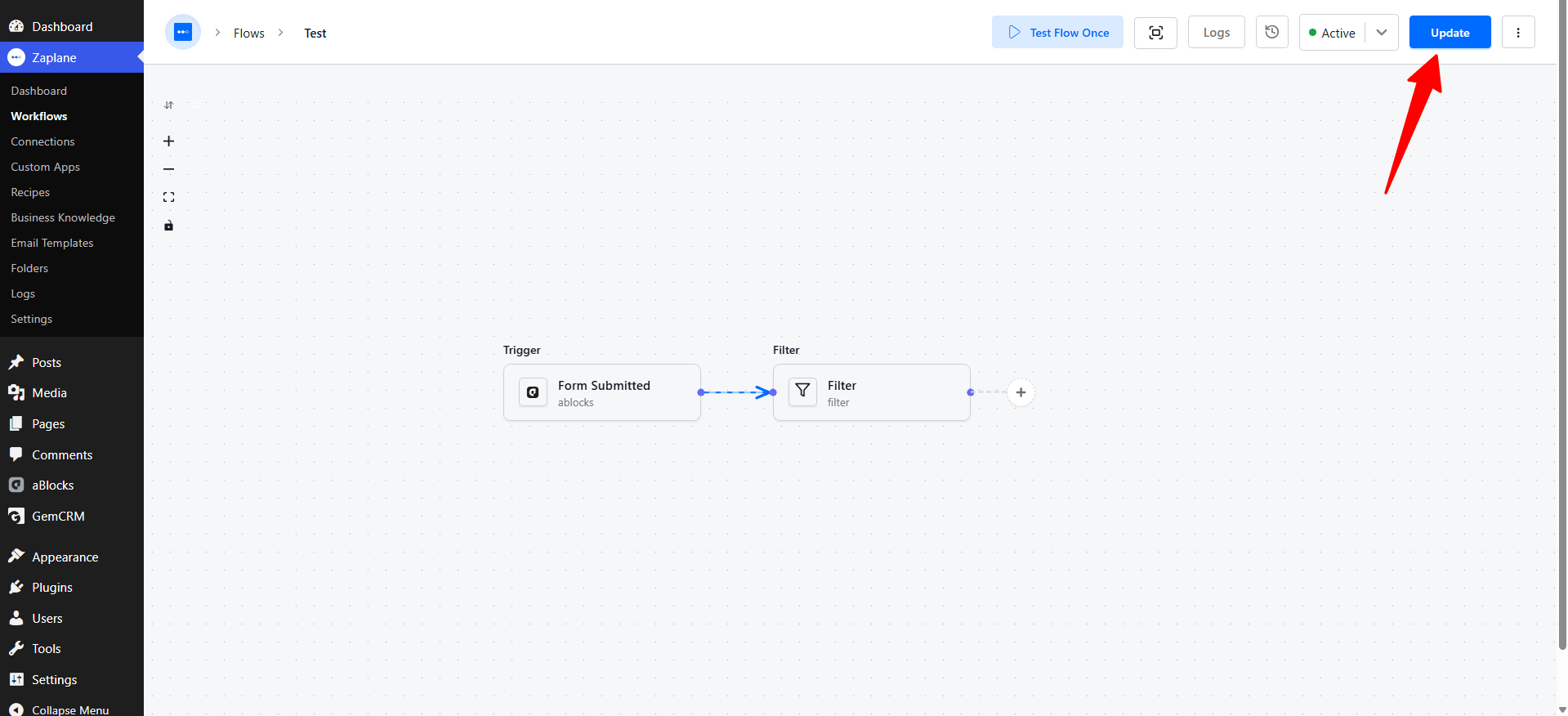
Runs that don’t pass the filter simply stop here — nothing after it runs, and nothing gets sent to your other actions.
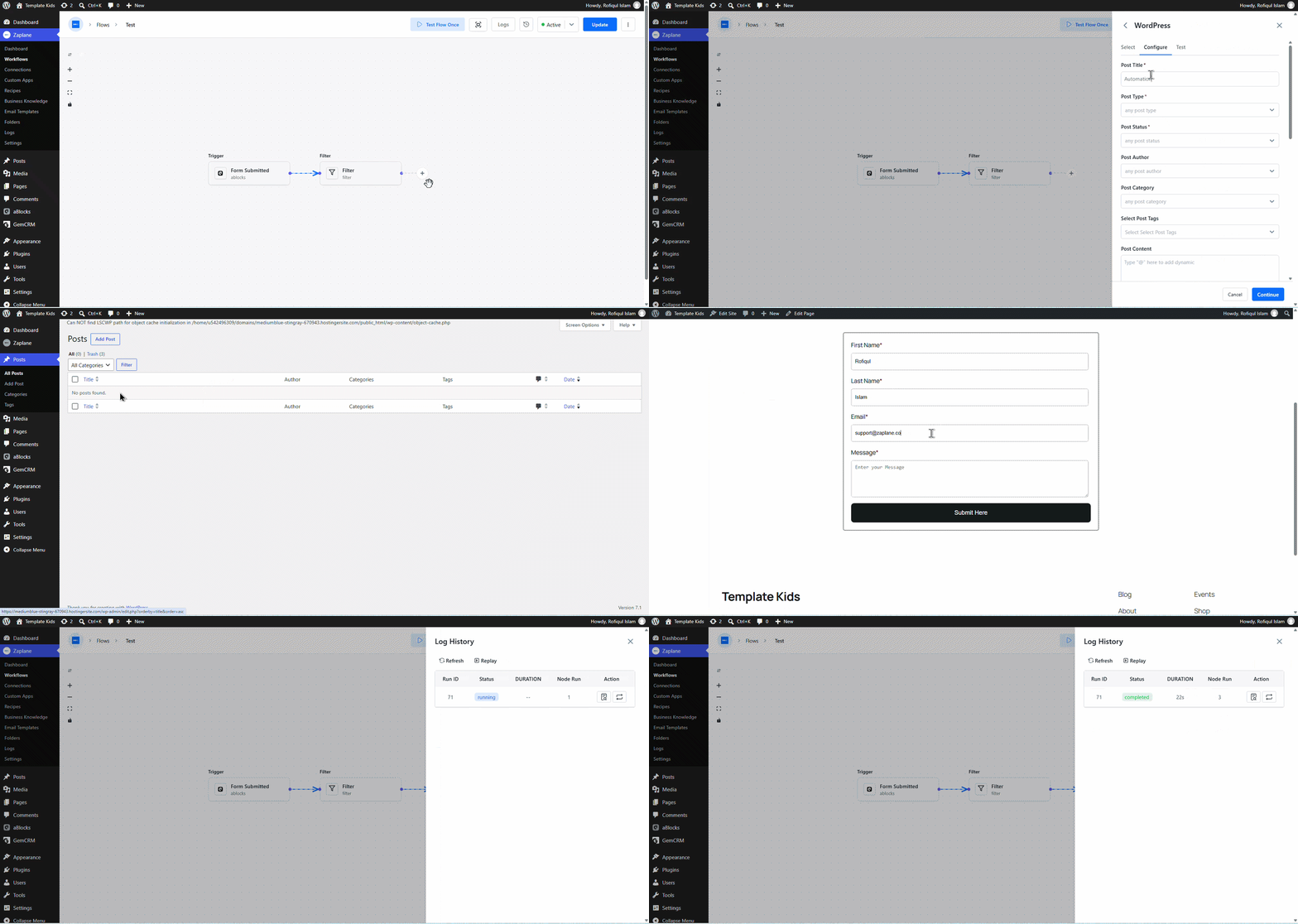
Done!
Your Zaplane workflow now only continues past this point when the data matches your rule, keeping downstream actions clean of runs you don’t want to act on